
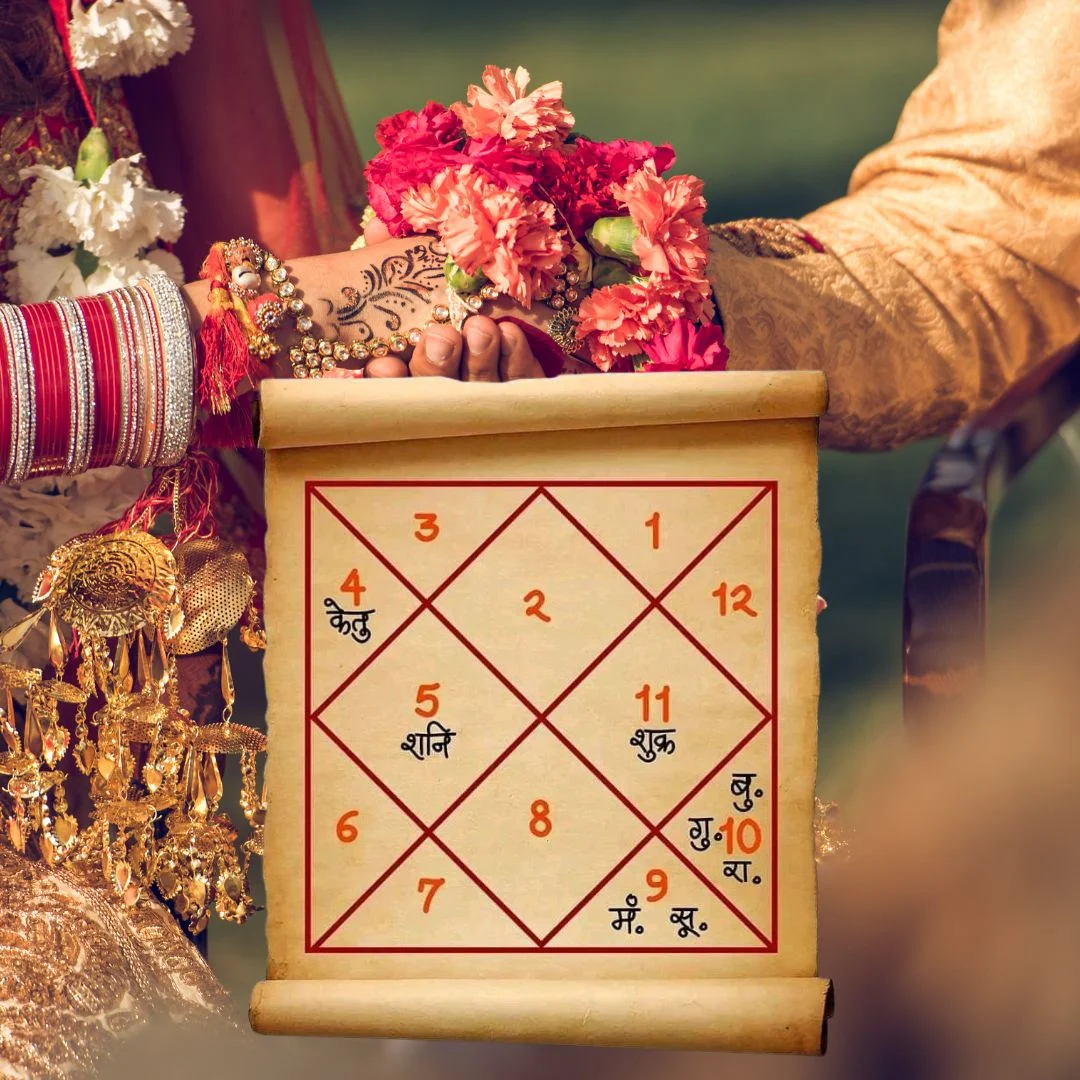
Kundli matching is a traditional Vedic astrology method used to assess how compatible two people are before marriage. Also known as horoscope matching or Kundali Milan, it compares the two birth charts to identify strengths and potential challenges in married life.
To match Kundlis accurately, you need the date, exact time, and place of birth for both people. These details help calculate the positions of planets, zodiac signs, houses, and nakshatras at birth.
Kundli matching is not only about getting a high score. A proper analysis studies emotional compatibility, physical attraction, communication, family life, finances, health, children, and the long-term stability of the relationship.
Core Components Evaluated
1. Guna Milan (The 36-Point System)
The most well-known part of Kundli matching evaluates compatibility across 8 categories (Ashta Kootas) worth a combined total of 36 Gunas (points):
- Below 18 Points: Not recommended; indicates low compatibility.
- 18 to 24 Points: Acceptable compatibility; average match.
- 25 to 32 Points: Very good compatibility; highly recommended.
- 33 to 36 Points: Exceptional compatibility (rare).
The most widely used system is Ashtakoota matching. It compares eight factors, primarily based on the Moon sign and birth nakshatra. The total score is 36 points.
The eight factors are:
- Varna (1 point): It indicates spiritual outlook, values, and the nature of the ego.
- Vashya (2 points): It studies mutual influence, attraction, and the balance of control in the relationship.
- Tara (3 points): It compares the birth stars of both partners. It is associated with health, fortune, and general well-being.
- Yoni (4 points): It represents physical attraction, intimacy, and instinctive compatibility.
- Graha Maitri (5 points): It checks the friendship between the lords of the Moon signs. It reflects mental compatibility, understanding, and communication.
- Gana (6 points): It studies temperament and behavioural nature. The three Ganas are Deva, Manushya, and Rakshasa.
- Bhakoot (7 points): It examines the relationship between the Moon signs. It is linked with emotional bonding, prosperity, family growth, and stability.
- Nadi (8 points): It relates to health, genetics, vitality, and the possibility of children. It carries the highest importance.
2. Dosha Analysis (Planetary Afflictions)
Even with a high Guna score, astrologers check for specific planetary imbalances:
- Mangal Dosha: Occurs when Mars is positioned in houses that influence temperament and marital life. If one partner has Mangal Dosha and the other doesn’t, it is believed to cause friction unless specific astrological remedies are in place.
- Nadi Dosha: A major penalty in scoring (8 points lost) if both partners belong to the same Nadi (a physiological/vital energy archetype), believed to affect health or children.
3. Navamsha Chart (D9 Chart)
While the main birth chart (D1) shows general life traits, the Navamshachart is specifically analyzed to confirm the deeper, long-term strength of the marriage and the spouse’s nature.
Other Important Factors
7th House & 7th Lord Strength: The 7th house in a chart directly governs marriage. A strong 7th house, well-placed 7th lord, and positive aspects from benefics (Venus, Jupiter) signal marital harmony.
Venus is examined for love, attraction, affection, and marital comfort. Jupiter is studied for wisdom, family values, support, and growth. Traditional practice may give different emphasis to these planets depending on the chart.
The strength of the Moon is important for emotional balance and mental compatibility. Mercury is checked for communication, while Mars can show passion as well as conflict.
The planetary Dasha periods are checked to understand the timing of marriage and major events after marriage. Difficult Dashas running at the same time may require closer examination.
Charts Used in Kundli Matching
The main chart is the D1 or Rashi chart. It gives the overall picture of personality, health, relationships, family life, and planetary strength.
The D9 or Navamsa chart is especially important for marriage. It shows the deeper strength of planets, the quality of married life, and how the relationship may develop after marriage.
The Moon chart, prepared by treating the Moon sign as the first house, is used to study emotional nature, mental comfort, and everyday compatibility.
Some astrologers also examine the D7 or Saptamsa chart when there are specific concerns about children. It is not always required in a basic matching.
Kundli matching can highlight areas of harmony and possible friction. It should be treated as guidance rather than a guarantee. Personal values, communication, respect, emotional maturity, and shared goals remain equally important for a successful marriage.