Have you ever wondered how astrologers look at the night sky and decipher your personality, career, or life path? The secret lies in a celestial coordinate system known as the zodiac belt and the planets (Grahas) that travel through it. As per Vedic astrology, we are an integral part of the cosmic cycle; our life is shaped by planetary movements. They shape situations and circumstances of our lives.
Whether you are curious about basic astronomy or want to dive deep into Vedic Astrology (Jyotish), understanding how the zodiac belt and planets interact is foundational to cosmic wisdom.
What is the Zodiac Belt?
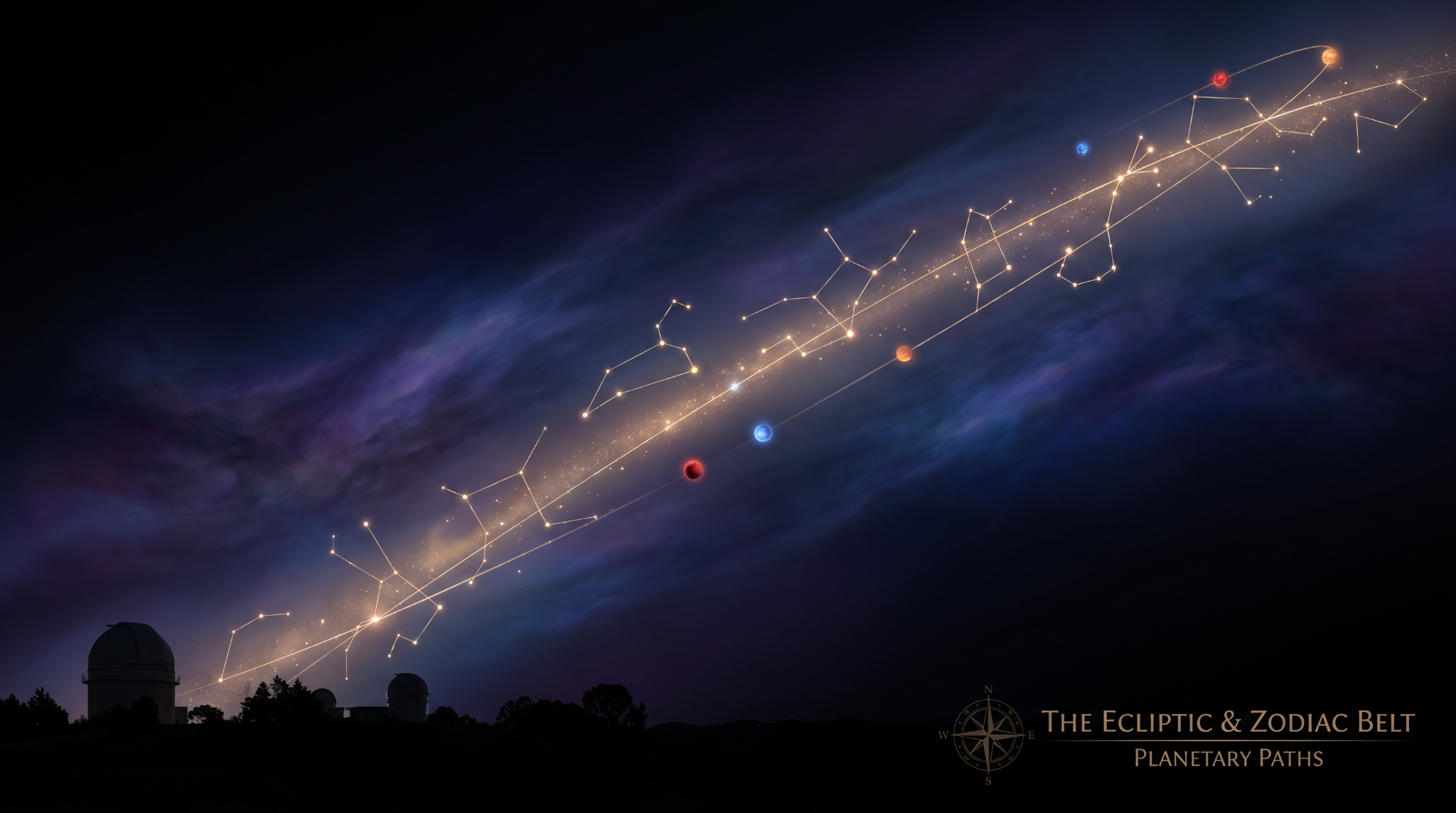
Imagine standing on Earth and looking out into space. As Earth orbits the Sun, the Sun appears to move against a backdrop of fixed stars and constellations along a specific pathway. This invisible, 360-degree circular pathway in the sky is called the zodiac belt.
The zodiac belt extends about 8 degrees north and south of the ecliptic (the Sun’s apparent path). Astrologers divide this full 360-degree circle into 12 equal segments of 30 degrees each. These 12 divisions are the familiar zodiac signs (Rashis), starting from Aries and ending with Pisces. These zodiac signs represent different environments that shape the behavior of planets; they are classified on the basis of the lordship of planets and elements like fire, earth, air, and water. This clearly shows how the zodiac belt shapes individuals’ various aspects of consciousness, such as decision-making, attitude, value system, and behavioral patterns.
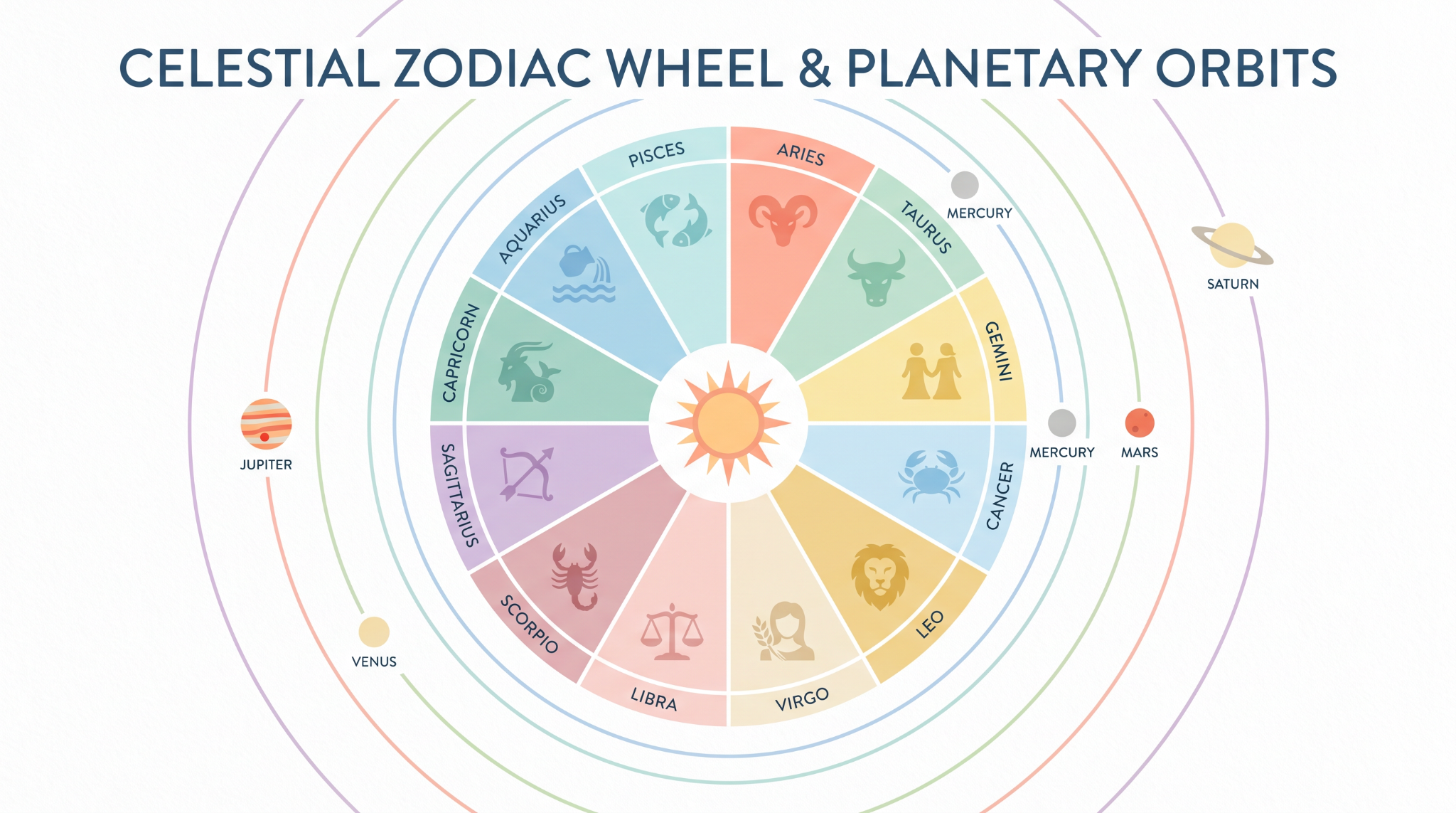
- Aries (Mesha) – 0° to 30°
- Taurus (Vrishabha) – 30° to 60°
- Gemini (Mithuna) – 60° to 90°
- Cancer (Karka) – 90° to 120°
- Leo (Simha) – 120° to 150°
- Virgo (Kanya) – 150° to 180°
- Libra (Tula) – 180° to 210°
- Scorpio (Vrishchika) – 210° to 240°
- Sagittarius (Dhanu) – 240° to 270°
- Capricorn (Makara) – 270° to 300°
- Aquarius (Kumbha) – 300° to 330°
- Pisces (Meena) – 330° to 360°
How Planets (Grahas) Work in the Zodiac
If the zodiac belt is a 12-lane highway, the planets are the drivers.
In Vedic Astrology, planets are called “Grahas,” a Sanskrit word meaning “that which holds, influences, or directs.” Grahas are not just lumps of rock or gas in space; they act as cosmic focal points that channel specific energetic qualities into human consciousness.
The 9 Navagrahas in Vedic Astrology
While Western astrology uses outer planets like Uranus, Neptune, and Pluto, traditional Vedic astrology focuses on the Navagrahas (9 core cosmic influencers):
| Graha (Planet) | Cosmic Principle | Vedic Significance |
|---|---|---|
| Sun (Surya) | Soul, Ego, Authority | The king of the chart, representing vitality and power. |
| Moon (Chandra) | Mind, Emotions, Intuition | The most important placement in Vedic birth charts. |
| Mars (Mangal) | Action, Courage, Energy | Represents physical strength, drive, and ambition. |
| Mercury (Budha) | Intellect, Speech, Logic | Governs trade, communication, and analytical thinking. |
| Jupiter (Guru) | Wisdom, Expansion, Dharma | The divine teacher bringing luck, growth, and morality. |
| Venus (Shukra) | Love, Art, Wealth | Governs relationships, luxury, and creative energy. |
| Saturn (Shani) | Karma, Discipline, Time | The strict teacher overseeing duty, hard work, and delays. |
| Rahu (North Node) | Desire, Ambition, Illusion | Shadow planet driving obsession and worldly expansion. |
| Ketu (South Node) | Detachment, Spirituality | Shadow planet governing liberation (Moksha) and past karma. |
How the Zodiac Belt and Planets Work Together
To understand how astrology functions, imagine a simple analogy:
- The Zodiac Sign (Rashi): The environment or filter.
- The Planet (Graha): The actor or energy source.
- The House (Bhava): The stage or life arena (e.g., career, marriage, health).
When a planet sits inside a specific degree of the zodiac belt, its core nature gets modified by the characteristics of that sign. For example, Mars represents action and fire. If Mars travels through Aries (a fiery sign it rules), it operates with maximum confidence. If Mars enters Cancer (a watery, emotional sign), its aggressive energy becomes muted or frustrated.
The Vedic Angle: Sidereal Zodiac & Nakshatras
Vedic astrology brings two unique, highly precise dimensions to the zodiac belt that distinguish it from Western astrology:
1. Sidereal vs. Tropical Zodiac
Western astrology uses the tropical zodiac, fixed to seasonal solstices. Vedic astrology uses the sidereal zodiac (Nirayana), anchored to the physical, observable stellar positions. Because Earth undergoes precession (a gradual wobble on its axis), the tropical and sidereal zodiacs differ by roughly 24 degrees. This is why your Vedic Moon or Sun sign is often one sign behind your Western sign!
2. The 27 Nakshatras (Lunar Mansions)
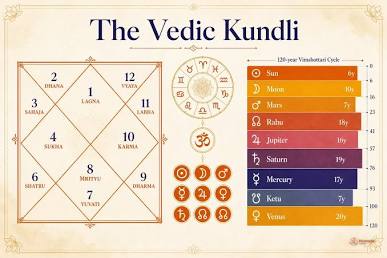
Vedic astrology divides the 360-degree zodiac belt even further—into 27 Nakshatrasof 13°20′ each. Each planet has three nakshatras; the first starts from Ashwini, ruled by Ketu, and the ninth is Ashlesha, ruled by Mercury, and then the cycle starts again.
Nakshatras are further divided into four padas, creating a further 108 divisions of the zodiac.
- First pada focuses on dharma, i.e., purpose, duty, and righteousness.
- Second pada focuses on artha, wealth, and material success.
- Third pada focuses on kama, i.e., relationships, desires, and enjoyment in life.
- Fourth pada focuses on moksha: spiritual liberation and service to humanity.
This division of the zodiac provides an important understanding of diverse human behavior; for example, two people having the same planetary position in a sign can have different behavior due to changes in nakshatra and its padas.
While zodiac signs reflect solar energy, nakshatras track the Moon’s monthly journey through the belt. Each Nakshatra is ruled by a deity and planetary ruler, granting deep insights into human psychology, subconscious tendencies, and life events.
The Takeaway
The zodiac belt is a giant cosmic clock, and the planets are its hands. As the planets orbit through the 12 signs and 27 Nakshatras, they form geometrical relationships (aspects) that shape planetary cycles (Dashas) in a person’s life. By reading where these planets fell along the zodiac belt at the exact moment of your birth, Vedic astrology builds a precise map of your karmic blueprint.
Quick Answers
Is the zodiac belt real?
Yes. The ecliptic and the band around it are real astronomical features, and astronomers use the same band to track the planets.
Why are there 12 zodiac signs?
Splitting 360° into 12 slices of 30° lines up neatly with the roughly 12 lunar months in a year.
Are Rahu and Ketu real planets?
No. They are mathematical points (the Moon’s nodes), but Vedic astrology counts them as grahas because of their link with eclipses.